

Eyelid aesthetics, i.e. blepharoplasty, is an aesthetic surgical procedure applied to the eyelids and tightening the parts around the eyes. Mostly after the ages of 35 and 40, sagging of the upper eyelids, bagging under the eyes and wrinkles are seen. This gives the person a sad and tired appearance. To prevent this appearance, excess skin on the eyelid is removed. In this way, the person will have a younger and fresh look. Eyelid aesthetic surgeries are generally more needed after the age of 35. The surgical risks of these aesthetic applications are low. Due to hereditary reasons, some people have disturbing problems with their eyelids at a young age. In these people, eyelid aesthetic surgery can be applied at an early age. Before eyelid aesthetics is performed, the eyebrow position of the person should be examined very well. If the person has low eyebrows, eyebrow lift surgery should also be among the operations to be considered.
Can eyelid surgery be applied to everyone?
Since the eye skin is the thinnest skin in our body, it is also the most easily wrinkled area. Although it is possible to temporarily correct these wrinkles around the eyes with Botox, eyelid surgery should definitely be performed for a permanent solution. Eyelid surgery is a method that can be easily applied to anyone and at any age where these wrinkles and deformations are present.
Will there be a scar on my eye after eyelid surgery?
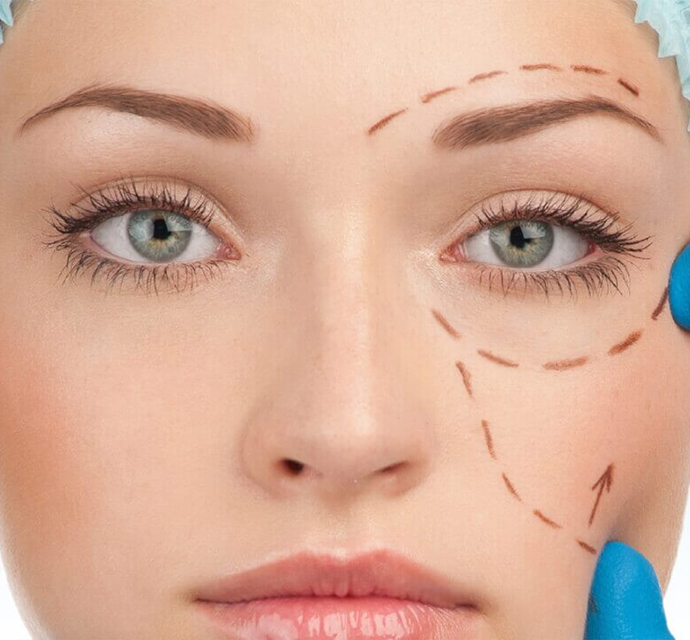
During eyelid surgery, the excess skin on the upper eyelid is removed with a simple method and sewn into the existing line in the area. Likewise, if there is an excess in the lower eyelid, the skin is opened with a line just below the eyelash and the fatty tissue inside is removed, then the lower eyelid is closed again. In short, this line formed during the surgery will remain just below the eyelashes and will not be visible.
How long does the surgery take?
Eyelid surgery is a simple surgery that is usually performed under local anesthesia or sedation. Upper eyelid surgery takes approximately half an hour and lower eyelid surgery usually takes an hour. Upper and lower eyelid surgery can be performed at the same time. In this case, the surgery will be completed in 1.5 hours.
Can I return to my normal life immediately after eyelid surgery?
Since eyelid surgery is an extremely simple operation, the patient can return home on the same day. The day after the surgery, the patient will be able to watch television and read books easily. After the surgery, the stitches on the eyelid will be removed within a week after the surgery. In short, the person will be able to continue his/her normal life immediately after the surgery.
What should I pay attention to after eyelid surgery?
After the eyelid surgery, there will be thin short bands in that area, but there is no need to close the eyes. After the surgery, the patient is recommended to lie on a high pillow. Since eyelid aesthetic surgery is a simple surgery, the patient can return to normal life after 1-2 days of rest.
Blepharoplasty is a type of surgery that removes excess skin from the eyelids. With age, eyelids stretch, and the muscles supporting them weaken. As a result, excess skin and fat can gather above and below your eyelids. This can cause sagging eyebrows, droopy upper lids and bags under the eyes.
Besides aging, severely sagging skin around the eyes can reduce side vision (peripheral vision), especially the upper and outer parts of the visual field. Blepharoplasty can reduce or get rid of these vision problems. The surgery can also make eyes look younger and more alert.
Why is blepharoplasty done?
Eyelid surgery might be an option for:
- Baggy or droopy upper eyelids
- Excess skin of the upper eyelids that partially blocks peripheral vision
- Excess skin on the lower eyelids
- Bags under the eyes
Blepharoplasty can be done at the same time as another procedure, such as a brow lift, face-lift or skin resurfacing.
What you can expect?
Before the procedure
Blepharoplasty is usually done in an outpatient setting. You might be given drugs such as injections into the eyelids to numb them and drugs through an IV to help you relax.
During the procedure
For upper eyelids, the surgeon cuts along the fold of the eyelid. The surgeon removes some excess skin, muscle and possibly fat. Then the surgeon closes the cut.
On the lower lid, the surgeon makes a cut just below the lashes in your eye’s natural crease or inside the lower lid. The surgeon removes or redistributes excess fat, muscle and sagging skin. Then the surgeon closes the cut.
If your upper eyelid droops close to your pupil, your surgeon may do blepharoplasty combined with a procedure called ptosis. Ptosis is designed to lift the eyelid as well as remove excess eyelid skin.
Recovery After Eyelid surgery
After blepharoplasty, you spend time in a recovery room where staff members monitor you for complications. You can leave later that day to heal at home.
After surgery you might temporarily have:
- Blurred vision from the lubricating ointment applied to your eyes
- Watering eyes
- Light sensitivity
- Double vision
- Puffy, numb eyelids
- Swelling and bruising similar to having black eyes
- Pain or discomfort
Take the following steps to help you recover from surgery unless your surgeon gives you different instructions.
Do:
- Do anything strenuous for a week — no heavy lifting, swimming, jogging or aerobics.
Smoke. - Rub your eyes.
- Wear contact lenses for about two weeks.
- Take aspirin, ibuprofen (Advil,
- Motrin IB, others), naproxen sodium (Aleve, others), naproxen (Naprosyn), and other drugs or herbal supplements that can increase bleeding.
Seek medical attention immediately if you have any of the following symptoms:
- Shortness of breath
- Chest pain
- An unusual heart rate
- Severe new eye pain
- Bleeding
- Vision problems
Expectations after Eyelid surgery
Many people who have blepharoplasty say they feel more self-confident and feel they look younger and more rested. For some people, surgery results may last a lifetime. For others, droopy eyelids can recur.
Bruising and swelling generally lessen slowly in about 10 to 14 days. Scars from the surgical cuts may take months to fade. Take care to protect your delicate eyelid skin from sun exposure.
Before & After


Every healthy adult can have eyelid aesthetics. However, most people who want to have eyelid aesthetics are over the age of 35. People with a genetic predisposition to eyelid sagging may prefer to have this surgery at an earlier age. The point that should be emphasized is the patient's expectations. Any adult who has sagging eyelids, has problems due to cosmetic problems and has realistic expectations from surgery can have surgery.
Treatment Process
The procedure can vary from person to person, but in general;